
The Role of Texture, Colour, and Flow in Food-Focused Interiors
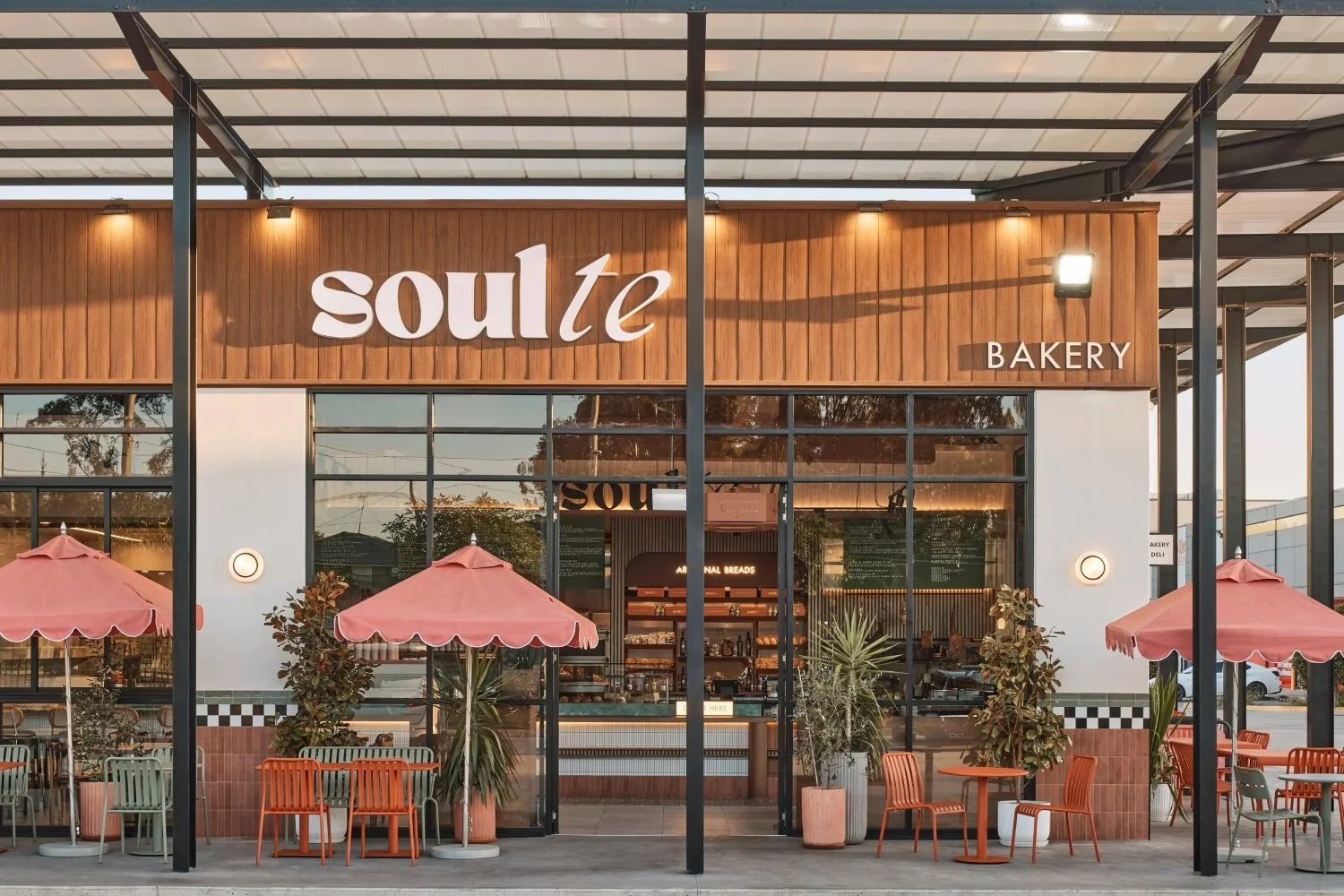
A successful food venue is shaped by more than the menu. The room itself affects how people arrive, order, wait, eat and remember the experience. In restaurants, cafés, bakeries and delis, three interior design elements carry unusual weight:
Texture
Colour
Flow
Together, they influence mood, comfort, legibility and pace. Layout, materials, lighting and ambience are the key factors that most strongly shape guest experience in Sydney.
Why guest experience starts with interior design
Guests form an impression before the first plate lands on the table. They notice whether the entry feels calm or cramped, whether signage is easy to read, and whether the room feels warm, bright, lively or flat. That first reading of the space affects trust. All these matter too: where people queue, how long they stay and how comfortable they feel while dining.
1. Flow should come before decoration
Flow is the hidden structure of a food-focused interior. When it works, guests rarely notice it. When it fails, everyone feels it.
Good spatial flow usually includes:
A clear path from entry to counter or host point
Enough space for queuing without blocking seated diners
Obvious collection, payment or takeaway zones
Circulation routes that work for both staff and guests
Seating arrangements that don’t leave people squeezed between tables.
This matters for any food business, be it a deli or a full-service dining room. A compact venue can still feel generous when movement is intuitive. By contrast, a beautifully styled room can feel clumsy if customers hesitate at the door or staff are forced to weave through bottlenecks.
2. Colour shapes mood, appetite and identity
Colour is often explained through psychology, but in real spaces it mostly shapes the mood and the feelings people connect with it.
Earthy reds, clay tones, soft greens, creams and timber-inspired shades tend to feel grounded and welcoming.
Lighter palettes can open up smaller rooms, while darker schemes may create intimacy when balanced with enough light and contrast.
Colour can influence perceived energy, appetite and the emotional tone of a space.
Useful colour principles include the following:
Match the palette to the food offer and service style
Use contrast where guests need to read menus or signs quickly
Let food remain visually prominent rather than fighting the room
Repeat key tones across finishes so the space feels coherent
Avoid relying on colour alone when wayfinding is important.
Expert hospitality design specialists always harness the power of colours. They use colour with restraint, giving the venue a distinct point of view without tiring the eye.
3. Texture gives the room depth
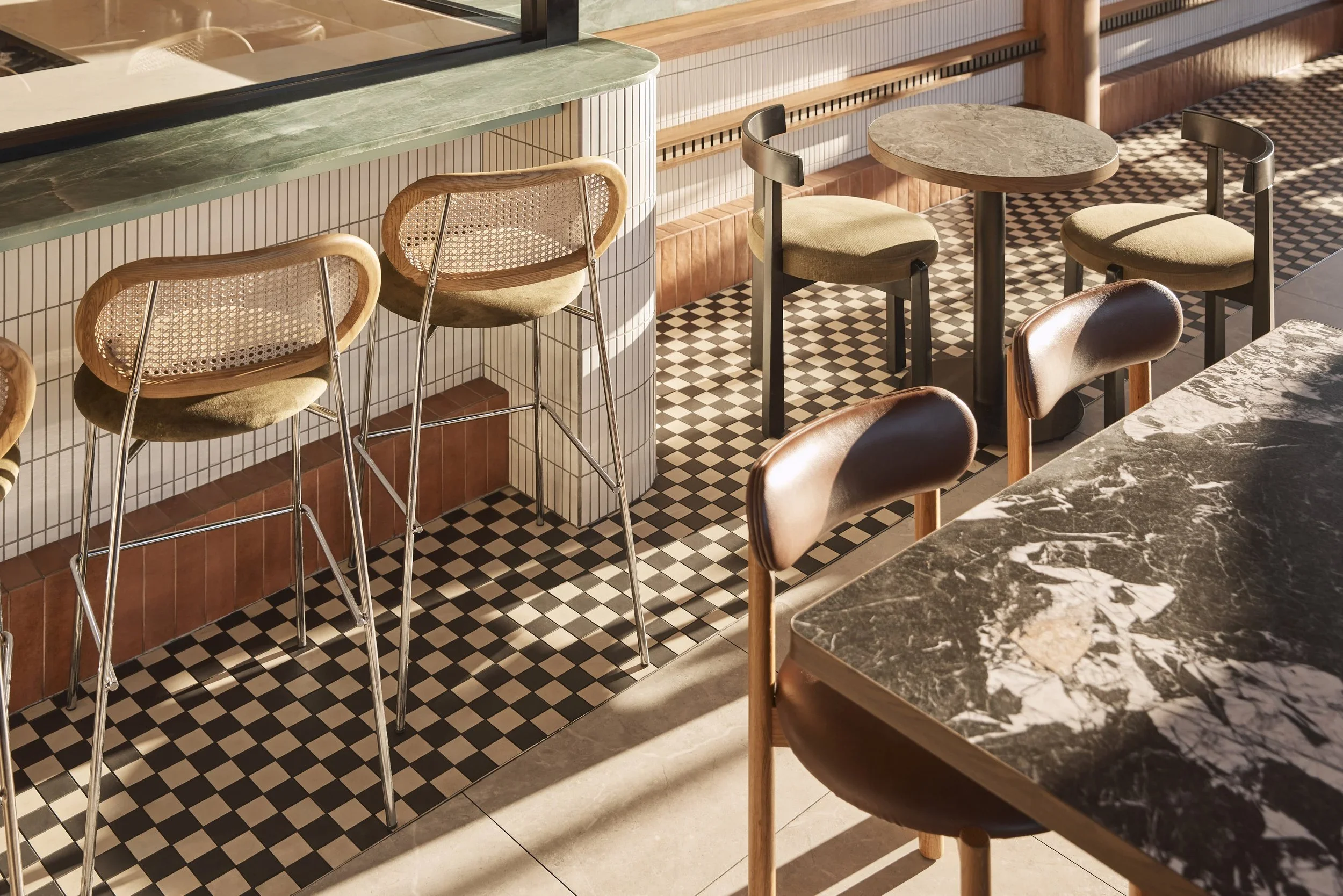
Texture is what stops a dining space from feeling one-dimensional. It can be visual, such as veined stone or handmade tile, or tactile, such as timber, upholstery or a softly rendered wall. The role of materials such as wood, stone and tile in setting tone and giving restaurant interiors a sense of character.
In practical terms, texture helps by:
Softening hard commercial interiors
Making a room feel warmer and more settled
Adding variety without relying on extra colour
Creating memorable focal points near counters, bars or banquettes
Supporting acoustics when softer finishes are included.
Guests may not name every material, but they notice when a room feels cold, noisy or generic. A good mix of robust and tactile finishes can make a venue feel more considered, which often changes how the food and service are perceived.
4. Visual hierarchy makes spaces easier to use
Every food venue asks people to make quick decisions: where to stand, where to order, where to sit, where to collect. Visual hierarchy helps with that. It is built through focal points, lighting, contrast, signage, furniture placement, and the arrangement of service zones. A room that reads clearly feels more hospitable because it reduces friction.
This is especially relevant in café interiors and casual dining rooms, where the journey from entry to counter often happens at speed. If the menu board is hard to spot or the queue cuts across the door, the room starts working against the guest.
5. Comfort still matters most
People rarely return to a venue because the tiles were interesting. They return because the place felt right. Comfort is built from several small decisions:
Seating that suits the length of stay
Enough room for conversation and privacy
Balanced lighting across day and night service
Acoustic control so the room has energy without strain
Temperatures and surfaces that feel inviting rather than stark.
When texture, colour and flow are handled well, comfort becomes easier to achieve. The space feels readable, settled and purposeful. That, in the end, is what makes a food-focused interior memorable.
Thoughtful use of texture, colour and flow can turn a food venue into a place people enjoy returning to. If you're planning a restaurant, café or deli, talk to an expert commercial interior designer to get started.
Frequently Asked Questions
-
Warm earth tones, greens, neutrals and timber-based palettes are often used because they create a welcoming mood and sit comfortably alongside food presentation. Lighter tones can make small venues feel more open, while deeper shades can make larger rooms feel intimate.
-
Layout affects movement, comfort, safety and service speed. A clear plan reduces congestion, helps staff work efficiently and makes the guest journey feel simple from arrival to departure.
-
Most welcoming spaces combine readable entry points, warm materials, comfortable seating, soft lighting and sensible table spacing. People tend to respond well to rooms that feel calm rather than cluttered.
-
Yes. Texture adds depth, warmth and identity. It can also improve acoustics and stop commercial interiors from feeling flat or overly hard.
-
Clear product display, easy ordering, durable finishes, strong visibility of service points and a layout that supports both browsing and quick transactions are all high priorities.