
How to Design a Deli That Customers Want to Linger In. Not Just Order From
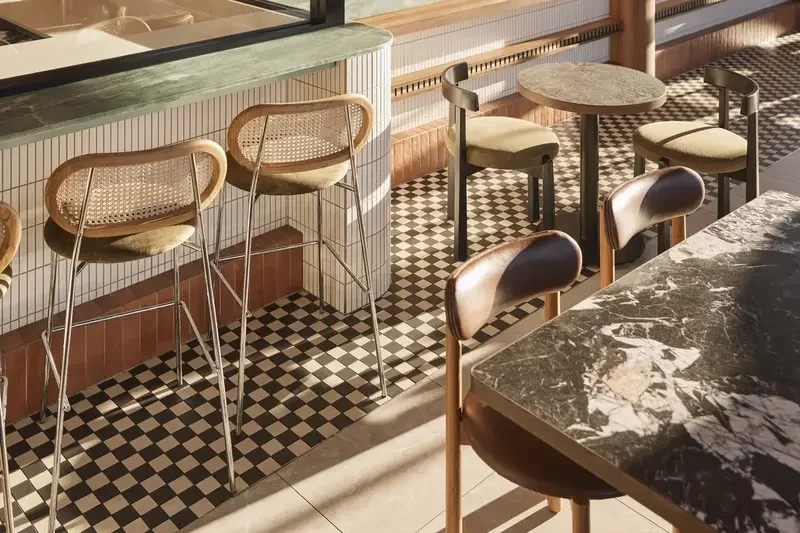
A deli becomes linger-worthy when it is designed as both a food retail space and a small hospitality venue. That means balancing fast ordering, clear product display, comfortable seating, lighting, acoustics, materials and brand identity so customers can browse, pause, eat and return with ease. For Sydney deli and bakery operators, the best design decisions also need to sit alongside food-premises fit-out, access and local council requirements.
Key takeaways
A deli that encourages lingering needs more than seating. It needs a layout that separates ordering, waiting, browsing and dining.
Materials should support both atmosphere and hygiene, especially around counters, floors, preparation areas and food display.
Lighting should make food look appealing while still supporting cleaning, safety and staff visibility.
Brand identity should be built into signage, menus, colours, packaging and interior details, not added at the end.
Before committing to a fit-out, Sydney hospitality owners should check council, food-safety and accessibility requirements.
Why some delis feel like a queue, while others feel like a destination
Many delis are designed around the transaction: enter, order, pay and leave. That can work for a high-volume takeaway model, but it limits dwell time, upselling and repeat visits from customers who want a slower experience.
A destination deli works differently. It gives customers reasons to stay. They may browse the cabinet, sit for a coffee, meet a friend, watch food being prepared or take in the atmosphere before ordering. The space still needs to move people efficiently, but it should not feel like customers are being pushed out as soon as they arrive.
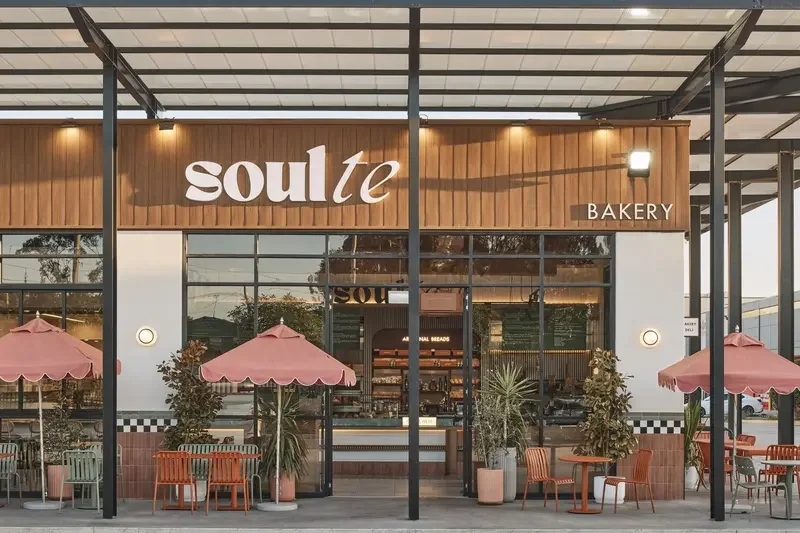
Al & Co Haus of Design’s Soul Té project in Minchinbury treats the deli and bakery format as a hospitality experience.
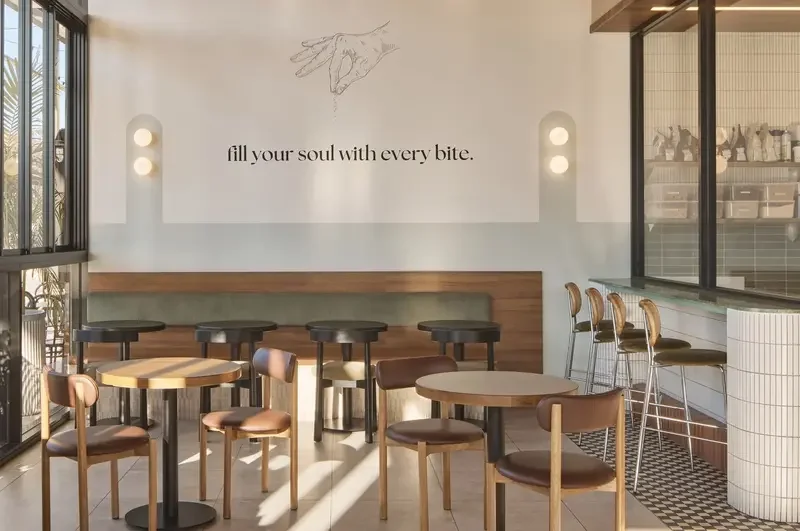
Soul Té is a “Bakery & Deli / Hospitality” space that uses green marble, bright sun-drenched colours, layered textures and nostalgic references to create a modern setting for connection, comfort and gathering.
So, How to Design a Deli That Customers Love?
Start with the customer path, not the furniture
Before choosing chairs, tiles or feature lighting, map the customer’s path from the street to the counter, then to the cabinet, payment point, pick-up zone and seating.
For a Sydney deli, this often means designing for several customer types at once: the morning coffee customer, the lunch rush, the family buying bread and smallgoods, the office worker collecting takeaway, and the weekend customer who wants to sit down.
A good layout should answer these questions:
Can customers see what is available before they reach the counter?
Is there enough room to browse without blocking the queue?
Can staff move between display, preparation and service areas without crossing awkwardly through customers?
Is there a clear place to wait for takeaway orders?
Are dine-in customers protected from the pressure of the queue?
When these zones are unclear, customers often leave faster because standing, waiting and choosing become uncomfortable.
2. Design the counter as the heart of the deli
The counter is not just a sales point. In a deli, it is the stage for produce, service and trust. The customer should be able to understand the offer quickly: fresh bread, cheeses, meats, pastries, salads, pantry goods, coffee or prepared meals.
Glass display, shelving, menu boards and lighting should work together. If everything competes visually, the customer has to work too hard. If the display is too sparse, the space may feel unfinished or low energy.
For lingering, the counter should invite a slower look. Consider lower visual barriers, warm task lighting, clear product groupings and enough space for staff to explain items without holding up the entire queue.
3. Choosing materials that feel warm but still work hard
Deli interiors need durable materials because they deal with food, foot traffic, cleaning chemicals, oils, crumbs, water and temperature changes. In customer-facing areas, texture and colour can create warmth. In food-handling areas, cleanability and compliance become the priority.
NSW Food Authority states that cafés, restaurants and retail food outlets must be designed and constructed to satisfy Food Standards Code 3.2.3, and notes that AS 4674:2004 is commonly used as a method of compliance and may be required through local council development consent.
That means design choices should be reviewed early, not after materials are ordered. A beautiful finish that cannot be cleaned properly, resists maintenance poorly or conflicts with a council requirement can become expensive to change.
How branding turns a deli into a recognisable place
A linger-worthy deli should be recognisable even without the logo. Colour, tone of voice, packaging, menu layout, display rhythm and staff uniforms can all support the brand.
This is where interior design and branding should be planned together. A European-inspired deli, a contemporary bakery, a suburban family deli and a premium providore should not use the same visual language. The design should help customers understand the offer before they read the menu.
Al & Co Haus of Design works across interior design and branding, including hospitality, retail and commercial spaces in the Sydney market. Our experts also help with the design, space planning, lighting, furniture selection and branding elements such as logos, signage, menus and uniforms.
Frequently Asked Questions
How do I make a small deli feel comfortable without losing display space?
Use compact seating, wall-side banquettes, narrow ledges, clear shelving and a counter layout that keeps browsing separate from waiting. Comfort does not always mean more furniture; it often means better spacing.
What colours work best for a modern deli interior?
There is no single best colour. Warm neutrals, deep greens, terracotta, stone tones and bright Mediterranean-inspired palettes can all work, depending on the food offer and brand. The key is consistency across interiors, signage and packaging.
Should a deli have dine-in seating?
Dine-in seating is worth considering if your menu, location and staffing model support it. It may suit areas with office workers, weekend foot traffic, families or customers who buy coffee and bakery items.
What should I plan first in a deli fit-out?
Start with the operational plan: food offer, preparation needs, display requirements, storage, equipment, customer flow and council obligations. The visual concept should support these decisions.
How much does deli interior design cost in Sydney?
Costs vary depending on site condition, size, approvals, services, joinery, equipment, finishes and documentation. A tailored consultation is usually needed before reliable pricing can be discussed.
Talk to the Experts
If your deli concept is persistent, costly, unclear or starting to affect your confidence, time, compliance or decision-making, it may be worth getting tailored advice. You can contact Al & Co Haus of Design to understand whether the studio is the right fit and what the next step would involve. Their Sydney business listing is also available for current contact details and opening information.
About Author:
This blog post was prepared by Allan Patrick Dias, Creative Director at Al & Co Haus of Design. Based in Sydney, Al & Co Haus of Design works across hospitality, retail, commercial and lifestyle interiors, with a focus on spaces that combine visual identity, customer experience and practical day-to-day function.