
Beyond the Floor: How to Display Custom Stair Nosing Without the Clutter
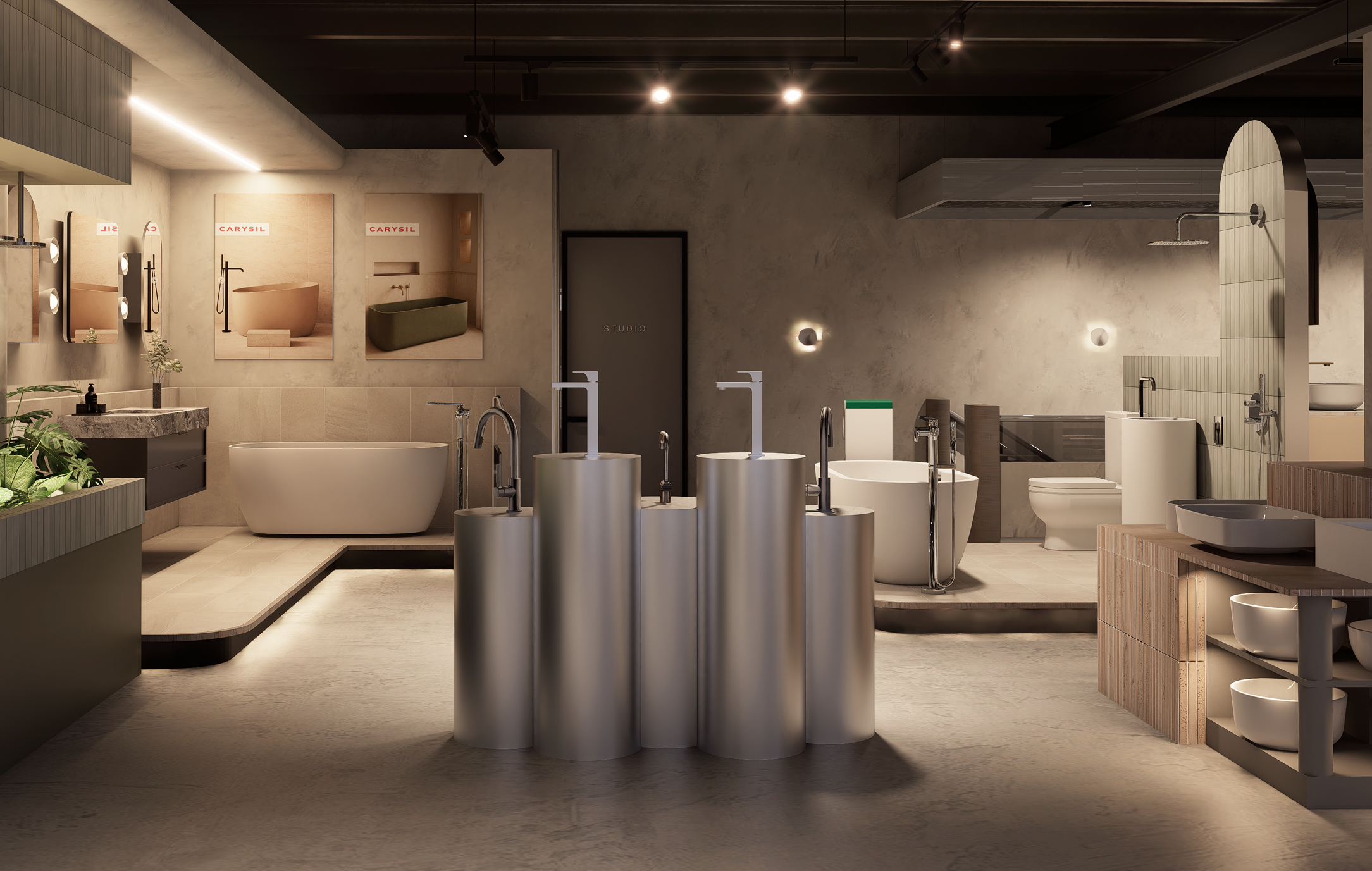
Custom stair nosing should be displayed as a product people can understand quickly, not as one more sample in a crowded wall. The clearest approach is to reduce visual noise, group products by use, and create simple comparison points so customers can read shape, finish and function at a glance. That matters because stair nosing is not purely decorative.
A good showroom does not need to display everything at once. It needs to help visitors answer practical questions:
What is this profile for?
How is it different from the next one?
Where would it sit best in a real project?
What details should be checked before specifying it?
That is where minimalist showroom design becomes useful for Sydney businesses. It is less about style and more about order. When the room is calm, the product reads better.
Why clutter fails in a product-led showroom
Clutter makes specialist products harder to compare. Stair nosing often varies in small but meaningful ways, so too many samples placed together can flatten those differences. A busy display may look generous, though it often slows people down and weakens the selling point of the product itself. Experts consistently stress grouping, hierarchy, sightlines and lighting because customers need help filtering information, not more information thrown at them all at once.
In a stair nosing showroom, clutter usually shows up in predictable ways:
Too many profiles on one panel
Repeated finishes with no clear reason
Labels that explain too much or too little
Decorative joinery that draws focus away from the product
No clear path from general browsing to detailed discussion
The result is familiar. Customers glance, hesitate, then ask for help before they have formed a clear view of the range. That is not always a staff problem. Often, it is a display problem.
Let the product lead the space
The room should direct attention to the product, not compete with it. That means letting spacing, lighting and layout do the heavy lifting.
A clean display strategy often includes:
A restrained base palette
Simple joinery details
Space between product groups
Short, practical labels
A clear path through the showroom
And this is practically possible when an interior designer can help. Al and Co’s expertise in Sydney interior design for showrooms is all about creating stylish, welcoming spaces, choosing lighting and finishes carefully, and setting the right tone for a business.
5 ways to display custom stair nosing without the clutter
1. Curate by application, not just by finish
Start with function. Most clients know the type of project they are working on before they know the exact finish they want.
Useful groupings include:
Residential stairs
Commercial interiors
Public access areas
External or wet-area use
This gives the display a practical logic from the beginning.
2. Use layered display zones
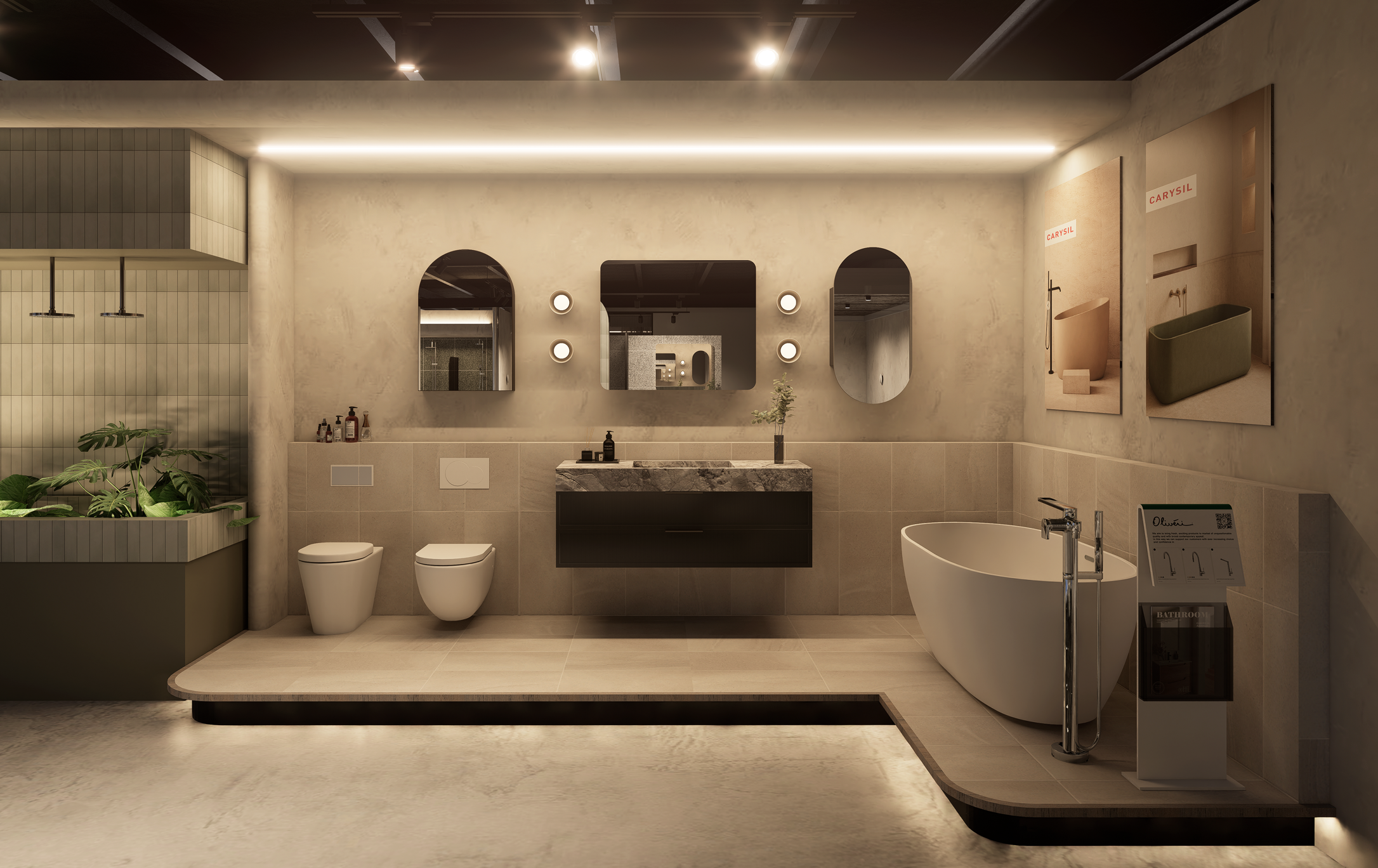
A mix of display types often works better than relying on one format alone. Combining wall-mounted sample areas with low-profile islands and focused comparison points helps organise the range and keeps the showroom easy to read.
This approach helps to:
Improve sightlines
Separate product groups clearly
Support easier comparison
Reduce visual clutter
Keep the space feeling open
3. Build clear comparison moments
Customers do not need twenty options at once. They need two or three relevant options shown clearly.
A good comparison area should:
Place similar profiles together
Point out one or two key differences
Include a short note on likely use
Avoid unrelated materials in the same section
4. Keep surrounding materials restrained
The fit-out should support the display. If walls, graphics or joinery are doing too much, the stair nosing loses focus.
That usually means:
Neutral colours
Limited textures
Simple detailing
Hidden storage for extra samples
5. Use lighting to reveal detail
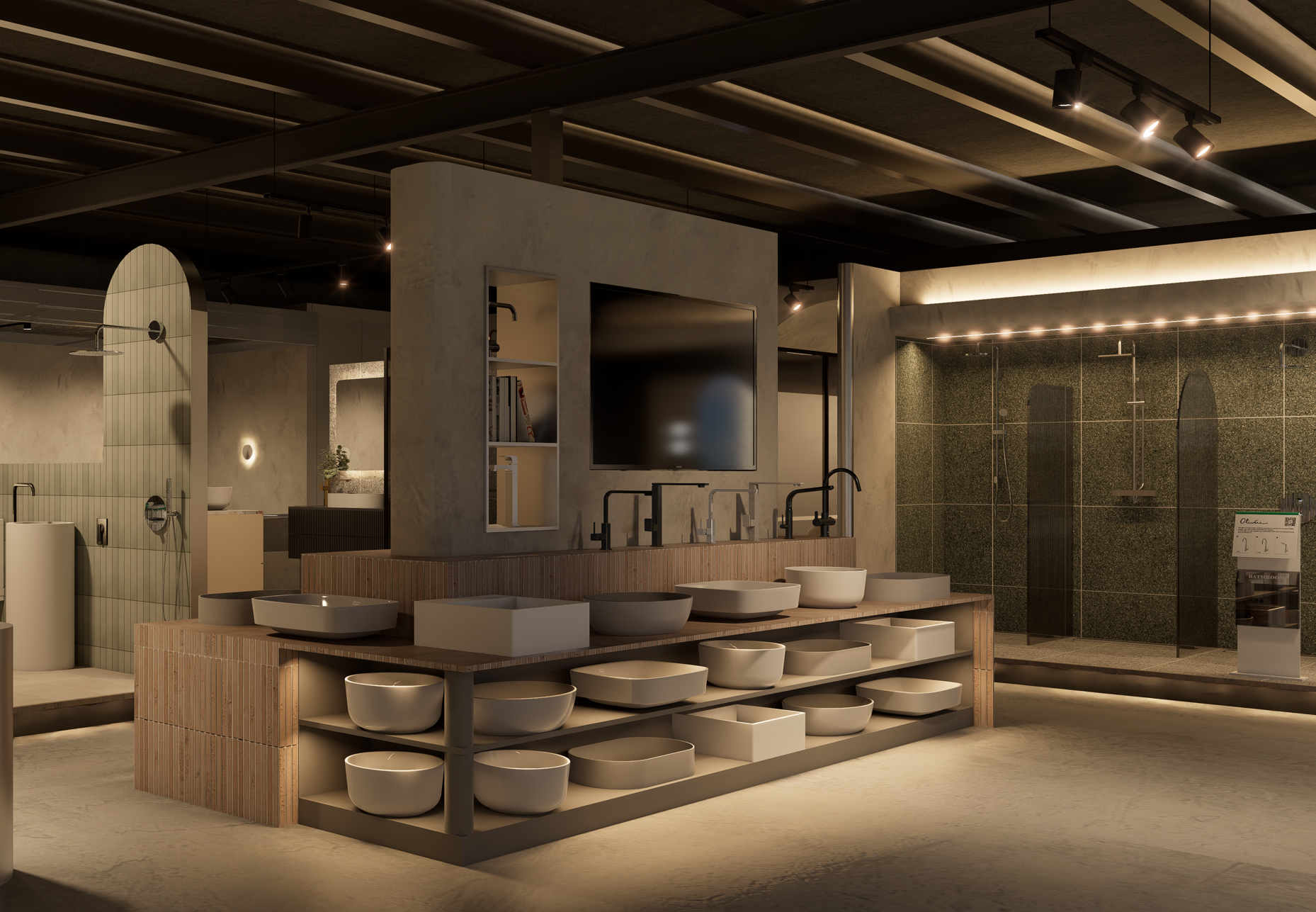
Lighting affects how customers read edge shape, insert material and surface finish. According to the experts at Al & Co, one blanket layer of light is rarely enough, and layered lighting helps people read products more clearly.
For stair nosing, useful lighting includes:
Even ambient lighting
Accent lighting on hero displays
Low glare on metallic finishes
Enough shadow to reveal profile depth
Also Read: Lighting The Way: Why the Right Lighting is the Most Important Design Element in an Optical Shop
Why expert curation matters for bespoke product showrooms
Specialist products benefit from specialist presentation. A bespoke interior design consultant helps decide what should be seen first, what belongs together, and what is better kept off the floor until it is needed.
Good curation can:
Reduce visual overload
Make technical products easier to compare
Support a smoother customer journey
Protect the premium feel of the brand
Turn a large range into a readable one
Conclusion
Displaying custom stair nosing well is not about fitting in more samples. It is about making a detailed product easier to understand. When the room is calm, the product groups are logical and the lighting reveals real differences, customers can compare with more confidence.
A pared-back showroom does not hide the range. It gives the range structure. Designing a showroom for custom stair nosing starts with clarity, not clutter. Talk to Al and Co Haus of Design about creating a refined, product-led space that helps customers compare confidently and connects every detail back to your brand.
Frequently Asked Questions:
1. How do you display stair nosing samples without clutter?
Show a selected range, not the full catalogue. Group samples by application, keep space between profiles and use short labels that explain use, not every specification.
2. What are the best minimalist showroom display ideas for flooring?
Vertical sample walls, hidden storage, neutral joinery, simple signage and focused comparison zones usually work best because they keep the room easy to read.
3. Why should stair nosing be grouped by function first?
Function gives customers a practical starting point. Once they know which profile suits the project, finish and detail choices become easier.
4. What kind of lighting works best in a stair nosing showroom?
Use even ambient light with targeted accent lighting on key displays. This helps customers see shape, texture and insert details without glare.
5. What makes a stair nosing showroom feel premium?
Clear sightlines, disciplined layout, calm materials and a logical customer journey. Premium spaces feel edited and confident, not overfilled.